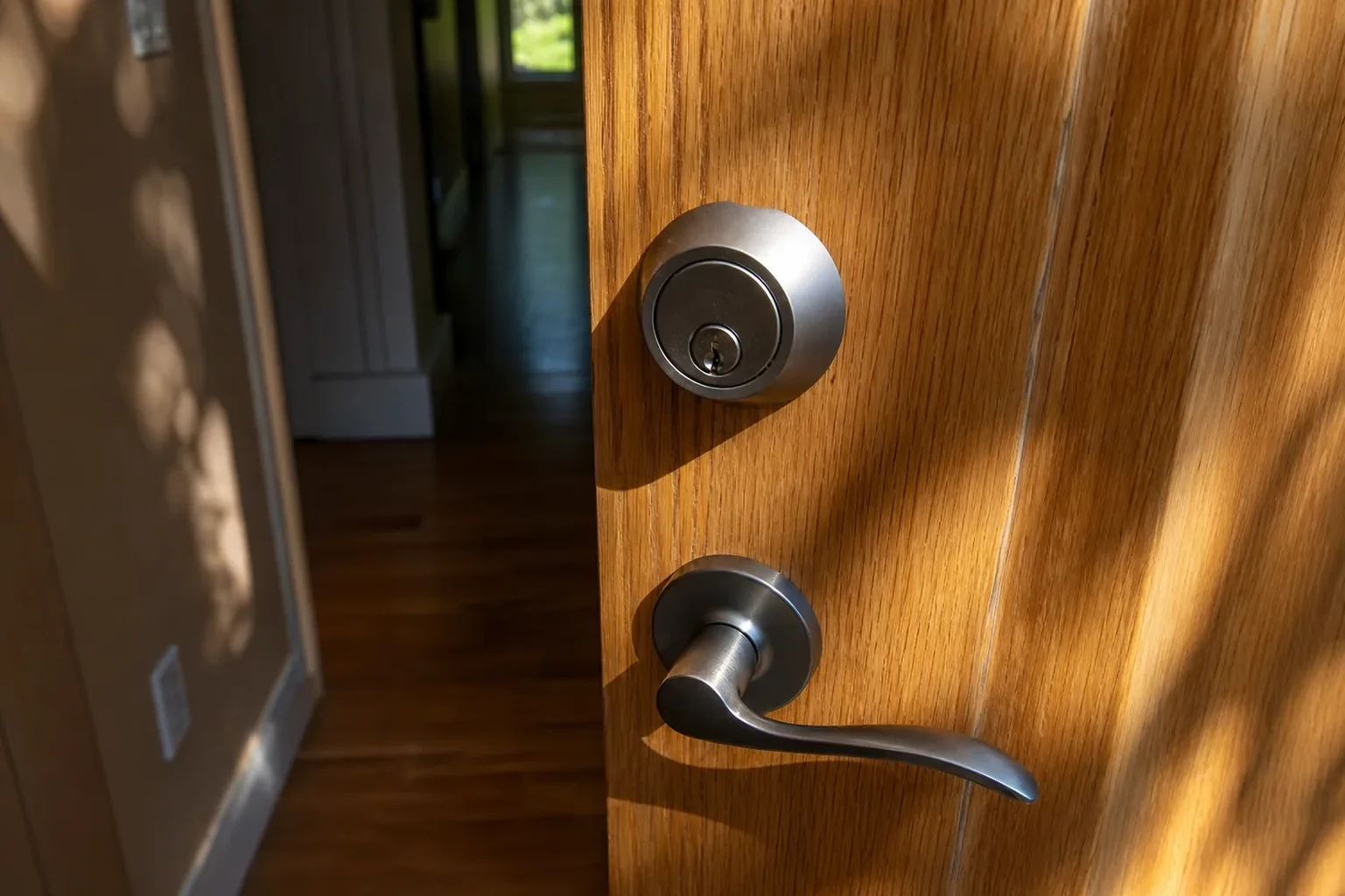
Rekeying keeps your existing locks and changes what opens them. The technician takes the cylinder out of the lock, replaces the small pins inside with a new set, and cuts keys to match. The old keys stop working. The lock on the door is the same lock; it just answers to a different key. It takes a few minutes per lock and it's done on your doorstep in Denton.
It's the answer to nearly every 'someone else has a key' problem: a move, a lost key, a tenant leaving, a breakup, a contractor who had the spare.
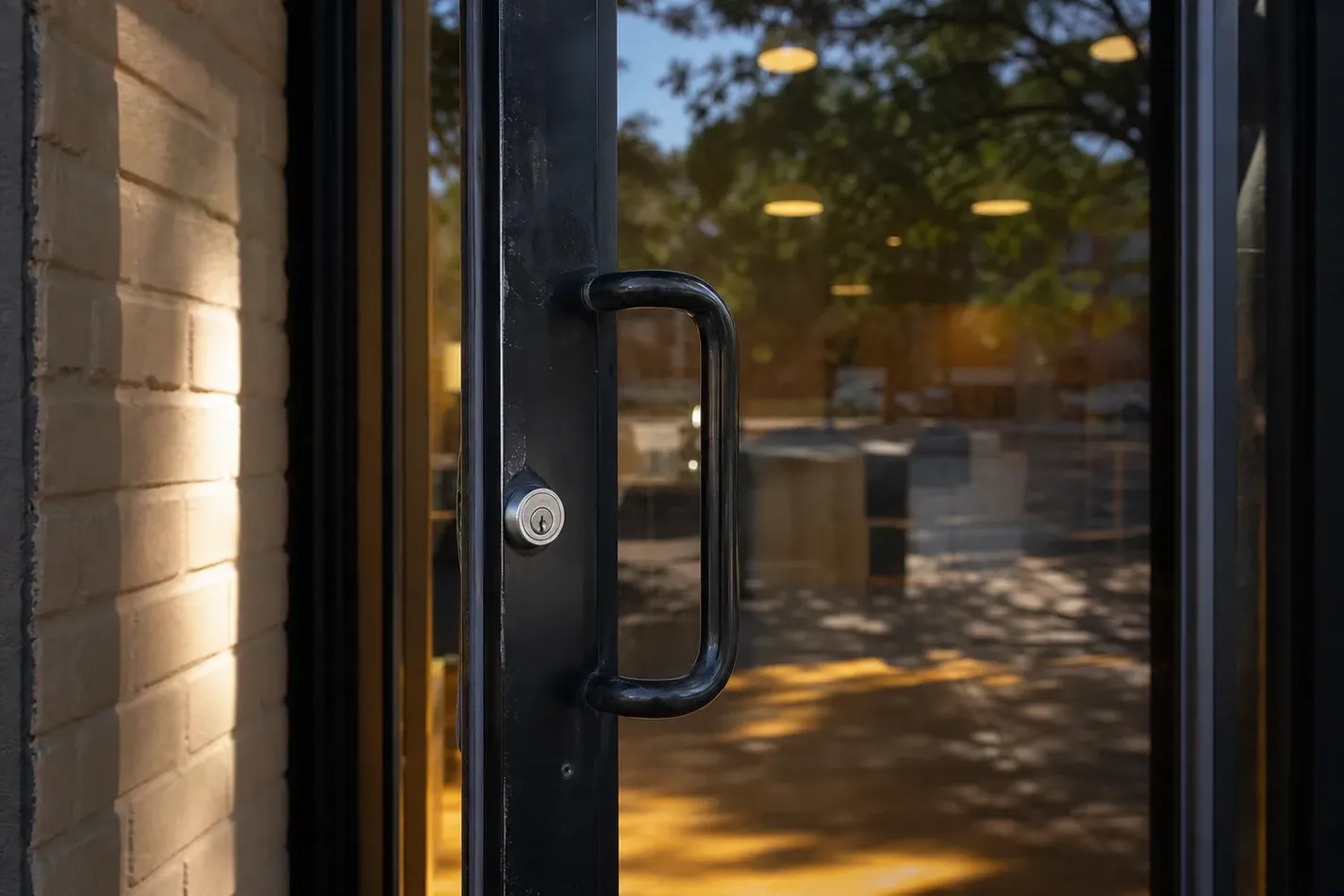
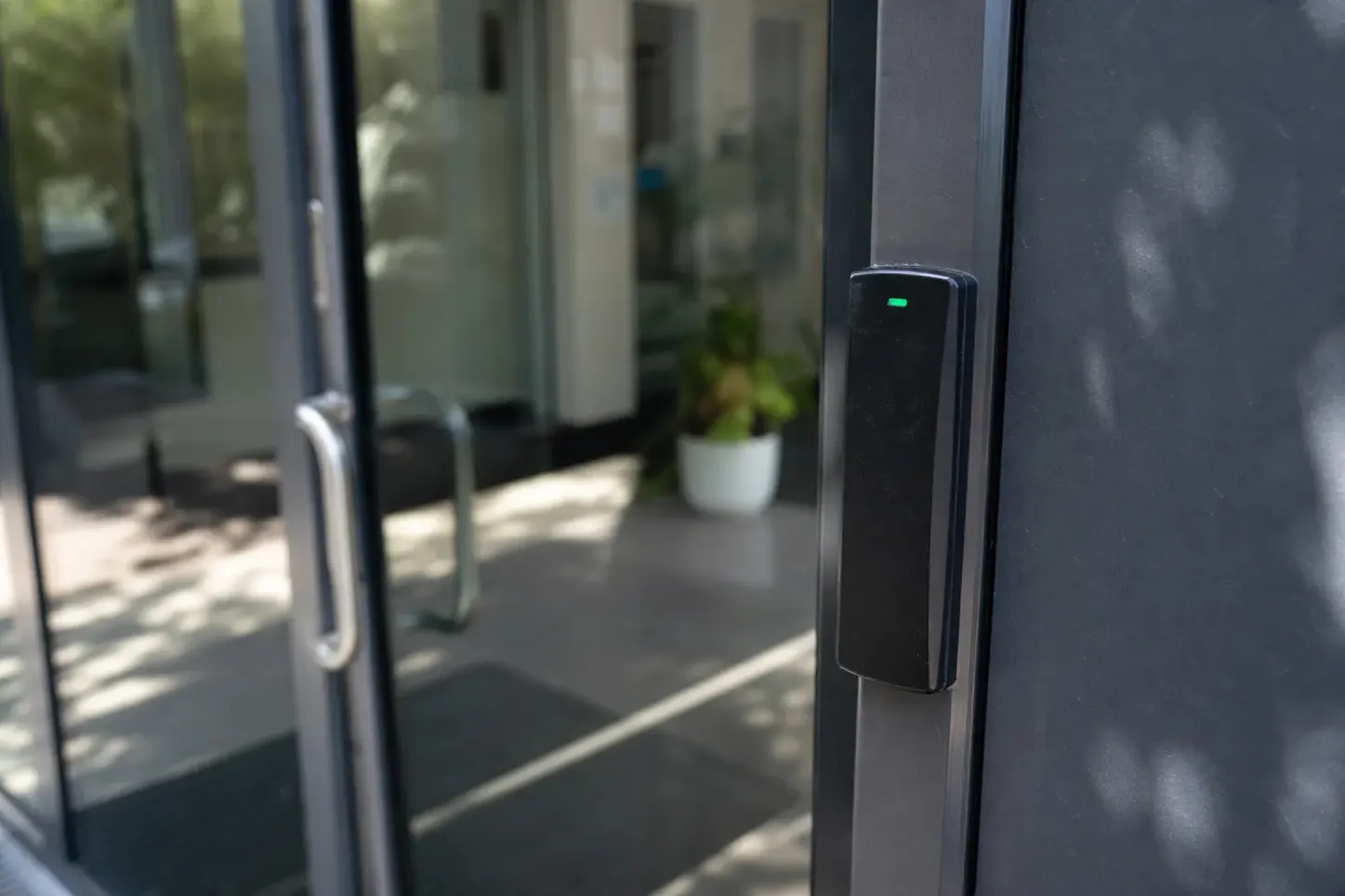
Changing the locks means removing the lock and fitting a new one. New cylinder, new latch or bolt, new handle or knob, new keys. It's the right call when the lock itself is the problem: worn, damaged, rusted, a knob that spins, a bolt that has to be forced, or hardware that was low grade to begin with. It's also the answer when you want something the old lock can't do: a deadbolt where there wasn't one, a keypad, a higher security grade.
So the question is never 'rekey or change' in the abstract. It's: is the lock good, and does it just need a new key? Or is the lock the problem?
Walk the house with the technician. A deadbolt that throws smoothly and a knob that doesn't wobble get rekeyed. A lock that sticks, a bolt that needs the door pulled to throw, a knob that turns freely without doing anything, or a builder's-grade lock on a front door, gets replaced. Many houses around Denton end up with a mix: the front door replaced with a proper deadbolt, the rest rekeyed to match. And one key for all of them, which is the part people like most.
Different brands can usually be keyed alike, so one key really can do the house. The technician says on site if a lock is the odd one out.
Nobody knows how many keys to a house exist by the time it changes hands: the previous owners, their relatives, the agent, the inspector, the cleaner, the neighbor with the spare. Rekeying on moving week closes all of that in one visit. It's the most common call we get from new owners in Denton, and it's a good time to have every exterior lock looked at, including the door from the garage into the house, which is the one people forget.
If you're a landlord, the same rule applies between tenants. Rekeying is quicker than the alternative, and it's what the next tenant deserves.
The technician confirms you're entitled to have the locks changed (photo ID against the address, or the landlord's authority for a rental), then works door by door. Rekeyed cylinders are repinned on the spot and new keys cut. Replaced locks come off and new ones go on, aligned so the bolt throws without lifting the door. You leave with a handful of new keys and a clear idea of which doors are now on which key. Nothing about how a lock is defeated is discussed, on site or here; that's deliberate.
Most houses take under an hour. Commercial buildings and master key systems are longer, and the technician will say roughly how long on the call.
Rekeying is a temporary fix. It's permanent; the old keys are gone for good. Different brands can't share a key. Most can. New locks are always more secure. A rekeyed good lock beats a new poor one. You have to change the locks if a key is lost. Rekey them; the lock is fine.
Almost always, even with different brands. The technician says on site if one lock can't join.
A few minutes per lock once the technician is at the door. A whole house is usually under an hour.
Yes. Photo ID against the address, or the landlord's authority for a rental, before any lock is touched.
If a key may have been taken, yes. If the lock was damaged, that door is replaced and the rest rekeyed. Either way it's the same visit.
Yes. A knob lock alone on an exterior door is the most common thing we replace, and a deadbolt is added in the same visit.
Tell us where you are and we dispatch a tech.